

A race to the top : what a footwear SME wants from Brussels
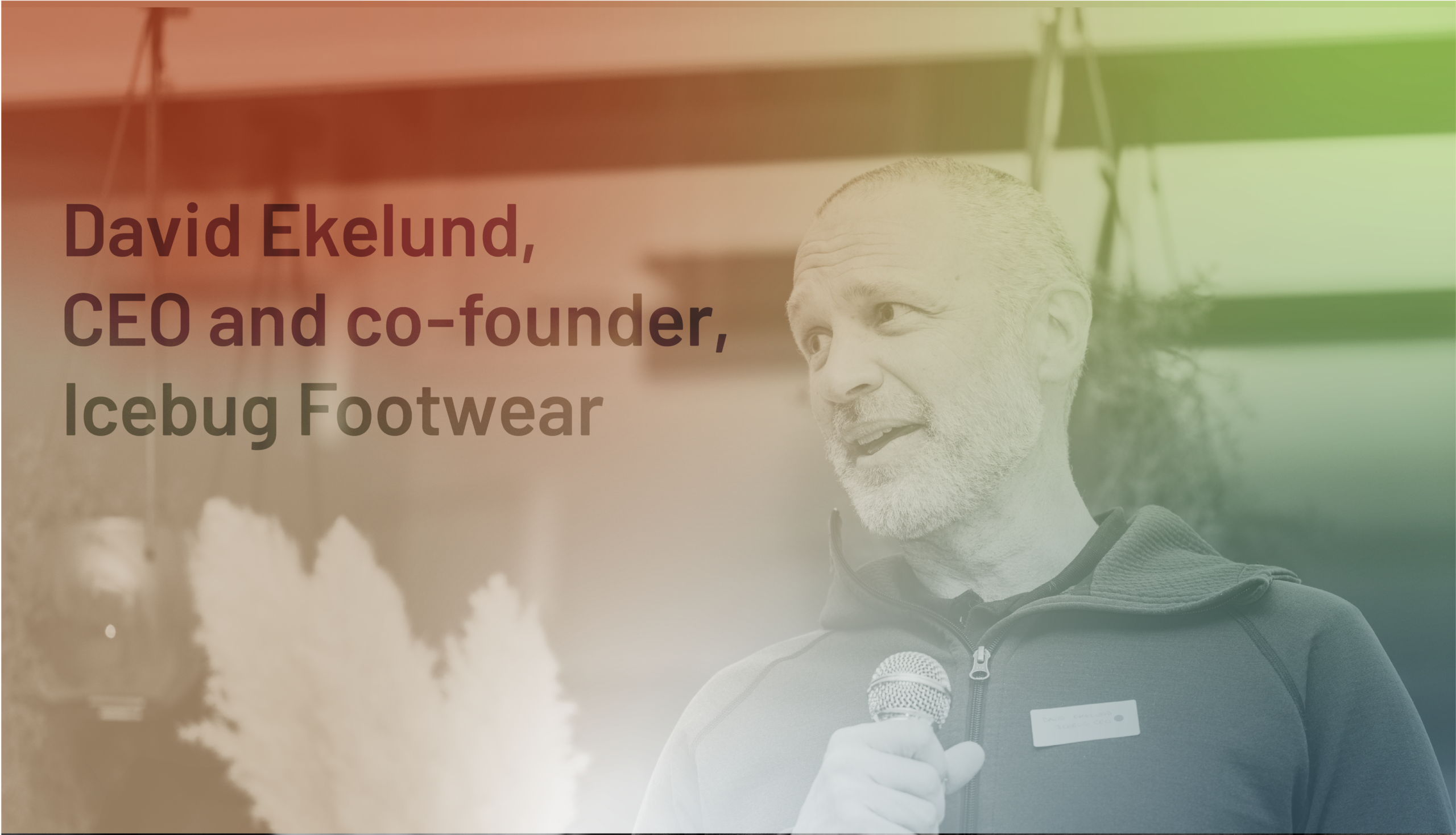
For the latest Ohana Brief, we spoke to David Ekelund, the CEO and co-founder of Swedish footwear company Icebug. We asked David how Icebug runs a business that puts nature and society first, and what he wants from EU regulation for SMEs.
Icebug turns 25 this year. David Ekelund founded the brand with his mother and now shares the CEO role with his business partner, Tom Nilsson. His own title is Chief People, Planet, Profit Officer, or C3PO for short, and it’s meant seriously: Icebug’s owners’ directives put nature and society ahead of the owners themselves.
The company is profitable, but it has no growth targets. It donates 1% of sales to environmental causes, holds Leader status with the Fair Wear Foundation, and, through its “There Are No Green Shoes” campaign, publishes the emissions of its footwear products, including where it still falls short.
We spoke to David about why Icebug works this way, and what he’d like to see from policymakers in Brussels.
Why a different model
Ohana: Was there a moment when you realised the traditional business model didn’t fit Icebug?
David: In many ways we’re a relatively traditional business. We make a product that solves a real need and creates value for people who are willing to pay for it. What changed is that we stopped relying on financial metrics alone to judge our success.
Part of that was the world around us. I first heard about Earth Overshoot Day in 2010, and realising that we consume more resources than the planet can regenerate was a big moment. Combine that knowledge with an inner compass of your own, and you start making decisions accordingly.
COVID accelerated it. It showed how interdependent we are: everyone’s emissions sit on top of everyone else’s. There’s no business as usual, because the economy will have to fit within planetary boundaries. That will be radical, but the alternative, an economy in a far more volatile Earth system, would be even more so.
Radical transparency
Ohana: Most brands carefully control their sustainability narrative. Why did you decide to publicly communicate the environmental impact of your products, not just the improvements?
David: One reason is that if you’re more transparent, you limit your risk. If you only put your best foot forward, the things you try to hide can be used against you. It’s a bit of a paradox, like showing vulnerability on a personal level: you actually become stronger.
The main reason is that it’s important to spread knowledge. We want to contribute to the common good, so if we make a sustainability win, we share it so others can adapt it and scale it. We need speed and scale for the transformation. The same goes for what doesn’t work well: it’s good if others don’t waste time going down a dead end.
The third reason is that we can’t wait for a perfect plan. I’ve been so frustrated when people get hung up on how to reach net zero in 2050, because nobody knows how we’ll do that. It’s much more important to do the first halving of emissions by 2030. Find your direction, start moving, and learn along the way.
We’ve had missteps too. After our first calculations, we compensated our emissions within the UN system and made a big thing of being the first climate positive outdoor footwear brand. Then we realised that narrative was being used by airlines and others to keep consuming as before, so we publicly moved away from it. It’s important to acknowledge mistakes, because if we wait for perfect, we won’t get anything done.
Success and value
Ohana: Which metrics matter most when you judge whether Icebug has had a successful year?
David: We do have a lot of metrics, and we’re a for-profit company. Most important is cash flow, because a steady cash flow means we have control. Profitability matters too, and we want to be in the range of 10 to 15%.
On sustainability, we’re steering towards minimising resource use and emissions per use. We measure the footprint, but we also want to assess how much a product can be used, and collect data on how much it actually is used. That’s our most important impact metric. We also want to get more people outdoors, being active in nature and together with others – that’s one way we can have a very positive impact on society.
Ohana: What do you do with the value once you pass that 15%?
David: We haven’t been there yet, so we don’t have a finished plan. But one aspect is AI productivity. There’s no doubt we get increased productivity, so as a society we need to decide whether it should further concentrate capital or distribute time. We’re clearly committed that we won’t fire anybody because of AI. Instead, when we reach 15%, we’ll give people more time off. We could also pay the people who produce our shoes a little more, or extend our giving. AI productivity gains can’t be turned into just making more stuff.
Our value distribution manifesto is quite interesting. The traditional model is to create, deliver, capture. We added a fourth part: distribute. Our aim isn’t to capture all the value with the shareholders, but to contribute to society. Others are value distribution: paying suppliers a fair price so they can pay their employees a fair price, paying taxes where we do business instead of moving to where it’s most beneficial, and salaries. Those aren’t costs, they’re value distribution.
Message to leaders and policymakers
Ohana: what do you want from policymakers, from an SME perspective?
David: From my limited time in Brussels, I’ve seen that a lot of people there want to do good things, but they’re under a lot of pressure. So it’s on us to drive narratives they can act on. Business, and especially small European SMEs, don’t want a race to the bottom. It might give short-term positive effects, but in the long term it will not be good for competitiveness. We want to join the race to the top, and a level playing field helps, because you can’t compete by exploiting people or nature.
We’d also like to extend a hand. It’s difficult for companies to stay abreast of what’s happening in policy processes, so do reach out when you want input. Business and regulators mostly agree on what we want out of legislation. How we get there is where we can help, by showing what effects things actually have. And one-stop-shop thinking is very helpful, for example when it comes to EU incorporated, which I think would make it a lot easier to start companies in the EU and for compliance, like the PPWR. It should be possible for a small or medium-sized company like us to do it in one place. Otherwise, there will be a lot of countries where we won’t offer our products.
Sustainability & competitiveness – good bedfellows
For a company like Icebug, ambitious environmental rules and competitiveness go together, provided the rules are clear and workable for smaller businesses. That means a level playing field, compliance that can be done in one place, and policymakers who ask those affected how rules play out in practice.
At Ohana, we help footwear companies and other sectors do just that, from making sense of new requirements to bringing their experience into the conversation in Brussels. Many thanks to David for his time and openness!
Further reading:
Find out more about Icebug
Read our recent blog about the footwear sector and EU regulation
Ohana’s services for footwear companies